
Gold jewellery is made to last—but everyday wear, sweat, cosmetics, and dust can slowly dull its shine. The good news? You don’t need expensive products or a trip to the jeweller every time. With the right jewelry cleaning solution and techniques, you can safely clean gold jewellery at home.
This guide covers simple, effective, and jewellery-safe methods, including rose gold, stone-studded pieces, and even oxidised gold.
Read more about how to clean diamond jewellery to ensure your precious stones stay just as sparkling.
Why Gold Jewellery Loses Its Shine
Before cleaning, it helps to understand why gold looks dull:
- Daily exposure to sweat, oils, and dirt
- Residue from perfumes, lotions, and makeup
- Soap buildup from frequent handwashing
- Oxidation or tarnish (more common in lower karat gold and mixed alloys)
Cleaning regularly—the right way—keeps your jewellery looking new and prevents long-term damage.
Jewelry Cleaning Solution You Can Make at Home
This is the safest all-purpose method for most gold jewellery.
What You’ll Need:
- Warm water
- Mild liquid dish soap (no harsh chemicals)
- Soft toothbrush or baby brush
- Soft cotton cloth
Steps:
Mix a few drops of dish soap in warm water
- Soak jewellery for 10–15 minutes
- Gently brush crevices and designs
- Rinse with clean water
- Pat dry and polish with a soft cloth
✅ Ideal for: Daily-wear gold jewellery, chains, bangles, rings
How to Clean Rose Gold Jewellery at Home
Rose gold contains copper, which gives it the pink hue—but also makes it slightly more delicate.
Safe Method:
- Use the same mild soap + warm water solution
- Clean gently with a soft brush
- Avoid scrubbing too hard
Important Tips:
- ❌ Do not use lemon, vinegar, or baking soda
- ❌ Avoid abrasive cloths
✔ Regular gentle cleaning preserves the warm blush tone of rose gold.
How to Clean Gold Jewellery with Stones at Home
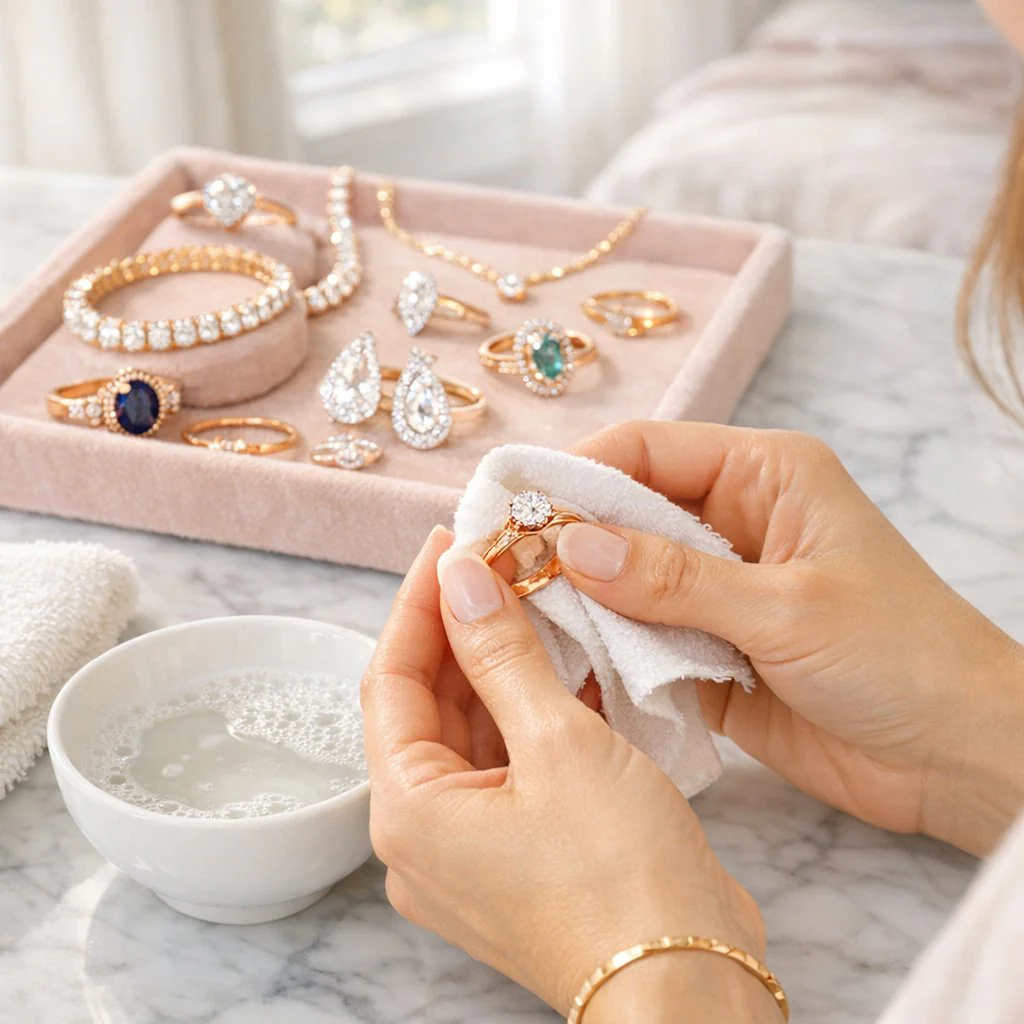
Gold jewellery with diamonds, gemstones, or pearls needs extra care.
Safe Cleaning Method:
- Mild soap + lukewarm water only
- Use a very soft toothbrush
- Brush gently around stone settings
Things to Avoid:
- Toothpaste
- Baking soda
- Ultrasonic cleaners (unless jeweller-approved)
⚠️ For pearls, emeralds, or opals:
Skip soaking. Wipe gently with a damp cloth instead.
How to Clean Gold Jewellery with Toothpaste (Use With Caution)
This method is popular—but not recommended for frequent use.
If You Still Choose to Use It:
- Use plain white toothpaste only (no gel, no whitening)
- Apply a tiny amount
- Gently rub with fingers or soft cloth
- Rinse thoroughly and dry
Why It’s Risky:
- Toothpaste is mildly abrasive
- Can cause micro-scratches over time
- Unsafe for stones and rose gold
⚠️ Use this only as a last resort, not for regular cleaning.
How to Clean Oxidised Gold Jewellery
Oxidised gold has a darker, antique finish—common in traditional jewellery.
Gentle Cleaning Method:
- Mild soap + water
- Soft cloth or soft brush
- Clean only surface dirt
Important Warning:
- ❌ Do NOT scrub aggressively
- ❌ Do NOT use lemon, vinegar, or baking soda
Harsh cleaning can remove the intentional oxidised finish permanently.
What NOT to Use on Gold Jewellery
Avoid these common mistakes:
- ❌ Baking soda or salt scrubs
- ❌ Vinegar or lemon juice
- ❌ Alcohol-based cleaners
- ❌ Rough brushes or paper towels
These can dull gold, weaken settings, and damage stones
How Often Should You Clean Gold Jewellery?
- Daily wear pieces: Once every 2–3 weeks
- Occasional jewellery: Every 2–3 months
- Stone-studded jewellery: Only when visibly dirty
Regular gentle cleaning is better than aggressive deep cleaning.
Final Thoughts
Knowing how to clean gold jewellery at home properly helps you:
- Maintain shine and beauty
- Extend jewellery life
- Avoid unnecessary polishing costs
Stick to mild jewelry cleaning solutions, be gentle with rose gold and stones, and avoid harsh DIY hacks. When in doubt—gentle soap and water is always the safest choice.