
Polki jewellery — with its antique charm and heirloom appeal — is one of India’s most treasured traditional jewellery arts. This guide explains what Polki is, how it differs from other traditional styles, how it’s made, why brides love it, how to buy authentic pieces, and how to care for them — all using verified online sources so you won’t have to guess or invent details.
Quick definition
Polki refers to jewellery made with uncut, unpolished natural diamonds set in traditional gold settings; the stones remain in their raw form rather than being faceted like modern diamonds.
Origins & History — Why Polki Feels Royal
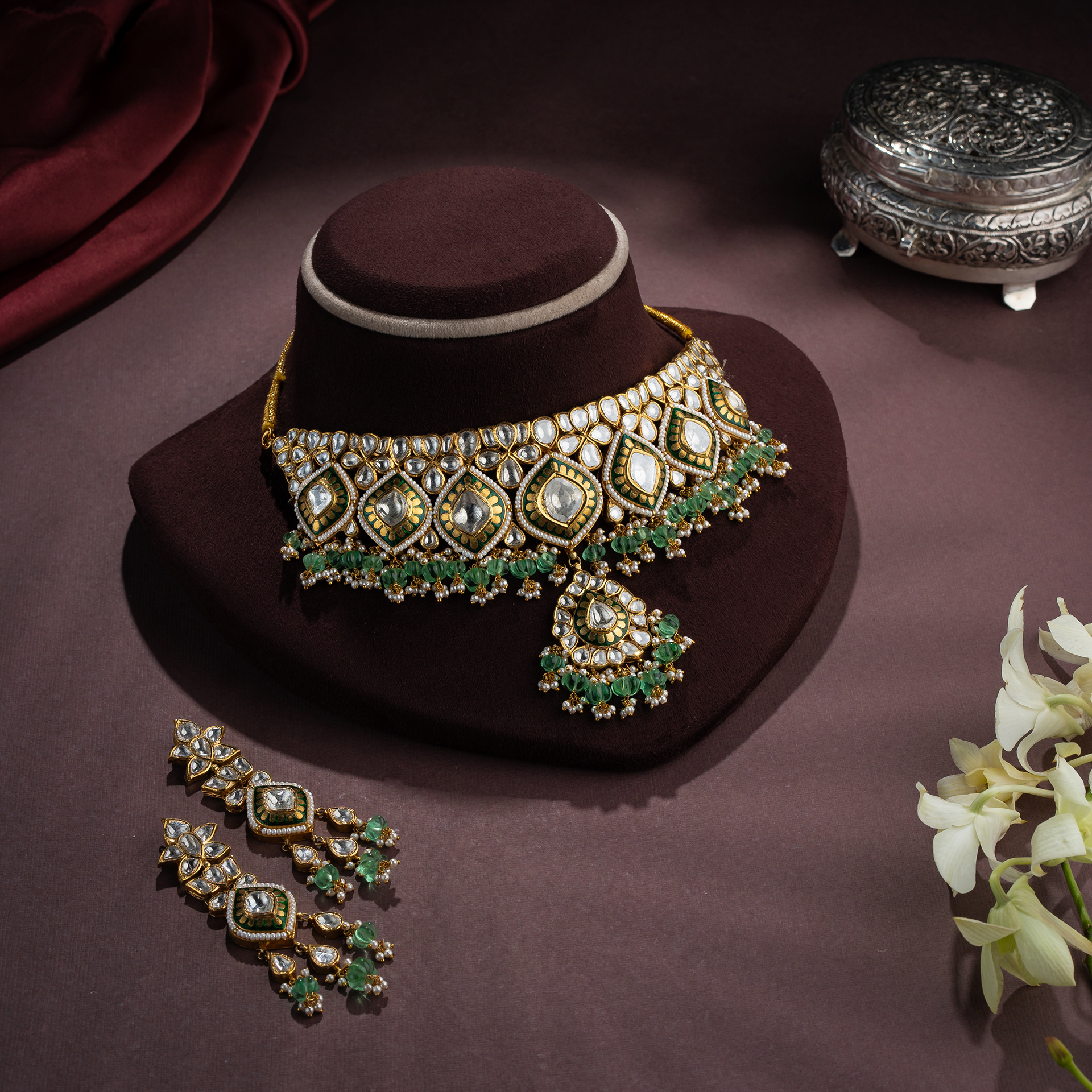
Polki is deeply rooted in India’s jewellery history. It predates modern diamond-cutting techniques and became highly popular during imperial and royal patronage periods, particularly under Mughal and regional royal households. The style was historically associated with royal bridal trousseaux and ceremonial jewellery due to its luxurious, handcrafted nature.
Regions known for keeping this tradition alive include pockets of Rajasthan, Gujarat and other centres where skilled goldsmiths and gem-setters practised these labour-intensive crafts.
What Exactly is a Polki Diamond?
A Polki diamond is an uncut, unpolished natural diamond used directly in jewellery — often trimmed slightly for shape but not faceted into the brilliant cuts familiar in modern jewellery. Because they are not faceted, Polki diamonds reflect light differently: a softer, antique glow rather than the sharp “sparkle” of modern cut diamonds.
How Polki Jewellery Is Made (Craftsmanship & Technique)
Creating Polki jewellery is a handcrafted art that combines the raw stones with traditional gold-setting techniques:
- Stone preparation: Uncut diamonds are selected and sometimes shaped gently to sit neatly in a setting.
- Setting method: Polki stones are commonly set using Jadau techniques — a historic skill where stones are embedded in gold (often with lac or foil backing) without modern soldering, requiring meticulous handwork. This method secures irregularly shaped stones while preserving their raw character.
- Finish & ornamentation: Polki pieces often include enamel (meenakari), pearls, or coloured gemstones (rubies, emeralds) to create layered, ornate bridal sets.
Because of the irregular shapes of the stones and the handwork involved, producing Polki jewellery requires skilled artisans and is time-intensive.
Polki Vs Kundan Vs Jadau — Clear Differences
These three terms are sometimes used together, but they refer to different things:
- Polki — refers to the material: uncut natural diamonds used in jewellery.
- Kundan — historically refers to a style where stones (including glass or gems) are set with gold foil backing. Kundan pieces often use glass or other stones and may be less expensive than real-diamond Polki.
- Jadau — refers to the technique of embedding stones in gold (the process), frequently used to set Polki and Kundan pieces.
Summary: Polki = the uncut diamond; Kundan = a foil-backed setting style (often glass or stones); Jadau = the traditional technique used to set stones in gold.
Visual & Style Characteristics That Make Polki Unique
- Antique look: Each Polki stone is unique in shape and texture, producing a vintage, heirloom aesthetic.
- Softer brilliance: Because Polki diamonds are uncut, their reflection is gentler than modern faceted diamonds — prized for old-world charm rather than flash.
- Statement pieces: Polki is often used for heavy necklaces (haar), chokers, jadau sets, earrings (jhumkas, chandbalis), and bridal maang tikkas. These pieces are designed to be showstopping and ceremonial.
Why Brides And Collectors Love Polki
- Heritage value & heirloom potential: Polki pieces have strong cultural resonance and are commonly passed down across generations.
- Timeless silhouette: While trends shift, the traditional shapes and grand scale of Polki jewellery suit weddings and high-ceremony dressing.
- Versatility with colour: Polki pairs beautifully with meenakari enamel and coloured gemstones, allowing designers to create richly hued, ornate sets.
Is Polki Jewellery Expensive?
Polki pieces can be costly. Price drivers include:
- Quality & size of the uncut diamonds — larger or clearer Polki stones cost more.
- Gold purity and weight — most traditional Polki sets use high-carat gold (often 18K–22K), which raises the price.
- Craftsmanship & detailing — handworked Jadau settings, meenakari and finishing add labour and value.
While Polki is an investment piece, its appeal often lies in cultural and emotional value as much as intrinsic material value.
How To Identify Authentic Polki Jewellery — A Buyer’S Checklist
When evaluating Polki pieces, look for:
- Stone authenticity: Polki should contain natural, uncut diamond(s). Reputable jewellers will confirm stone origin and offer documentation.
- Gold hallmark: Check for appropriate gold hallmarks (e.g., 22K) and ask for written metal certification.
- Technique & finish: Inspect the setting for handwork consistent with Jadau/Kundan techniques and lac or foil backing — machine-perfect settings may indicate imitations.
- Seller reputation: Buy from trusted, well-documented jewellers; ask for certificates and return/repair policies.
Styling Tips — Modern & Traditional Pairings
- Bridal: Heavy Polki haar with layered chokers + maang tikka for a traditional regal look.
- Festive: Pair modest Polki studs or small chokers with silk sarees or anarkalis for festival events.
- Indo-western: Use a single Polki choker or a delicate Polki pendant to anchor a fusion outfit — the raw sparkle contrasts beautifully with minimal silhouettes.
Care & Maintenance — How To Preserve Polki Pieces
- Avoid water & chemicals: Keep Polki jewellery away from perfumes, cosmetics and cleaning agents.
- Store separately: Use soft pouches or lined boxes to prevent abrasion against other jewellery.
- Professional cleaning & servicing: Because of lac/foil backing and hand settings, have pieces serviced by specialists to avoid damaging the stones or settings.
FAQ
Q: Are Polki Diamonds “Real” Diamonds?
A: Yes — Polki uses natural, uncut diamonds rather than synthetic glass or simulated stones. Always confirm with seller documentation.
Q: Can Polki Be Worn Daily?
A: Polki is best reserved for occasional wear (weddings, festivals) because many pieces are heavy and delicately set; daily wear risks damage.
Q: Does Polki Have Resale Value?
A: Polki’s resale value depends on diamond quality, gold content, and demand for traditional pieces; provenance and brand can influence prices.

2 thoughts on “What is Polki Jewellery?”