Introduction
When buying a Rani Haar, gold purity plays a crucial role in determining not just the price, but also the durability, appearance, and long-term value of the jewellery. In India, gold jewellery is commonly made in 18K, 22K, or 24K purity, each serving a different purpose in jewellery craftsmanship and usage.
For traditional and bridal jewellery, especially long necklaces like Rani Haar, 22K gold is most widely preferred because it balances rich colour with structural strength. Lower purities like 18K gold offer durability and affordability, while 24K gold, despite being the purest, is rarely used for jewellery due to its softness. Understanding these differences helps buyers choose the right purity based on occasion, comfort, and budget.
For an overall pricing overview, you can explore the complete Gold Pearl Rani Haar Price guide.
What Does Gold Purity Mean in Rani Haar Jewellery?
Gold purity is measured in karats (K), which indicate how much pure gold is present in a piece:
- 24K gold is 99.9% pure gold
- 22K gold contains 91.6% pure gold (commonly marked as 916)
- 18K gold contains 75% pure gold
Higher purity means a greater proportion of gold and fewer alloy metals. While this increases the value per gram, it also affects strength. Pure gold is naturally soft, so alloy metals like copper or silver are added to make jewellery suitable for wear.
This purity difference directly influences how Rani Haars are designed, worn, and priced.
22K Gold Rani Haar Price – The Bridal Standard
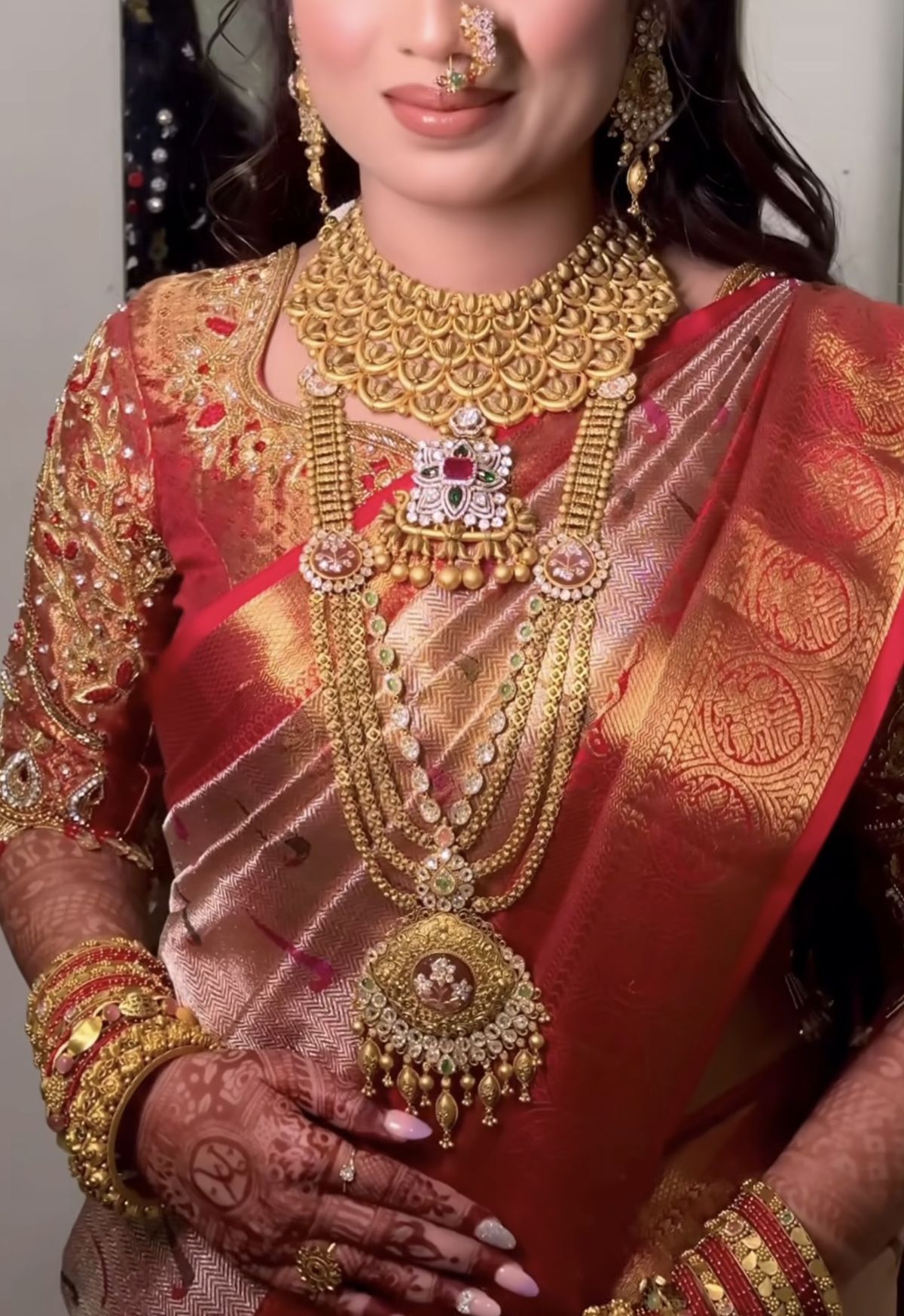
A 22 carat gold rani haar is considered the traditional standard for bridal jewellery in India. Jewellery experts and leading brands note that 22K gold offers a rich yellow colour, which is culturally preferred for weddings, while remaining strong enough to support intricate designs.
Because 22K gold contains a higher percentage of pure gold, the rani haar 22K gold price is higher per gram compared to 18K gold. However, it is still practical for long necklaces due to its balance of purity and durability. This is why most bridal and traditional rani haars are crafted in 22K gold.
Brides who prioritise tradition, appearance, and cultural value usually opt for this purity.
18 Carat Gold Rani Haar Price – A Practical Alternative
18 carat gold contains more alloy metals than 22K, making it stronger and more resistant to wear and scratches. Because it has a lower gold content, the 18 carat gold rani haar price is generally lower per gram than 22K gold.
This purity is often chosen for:
- Lightweight or modern jewellery designs
- Buyers prioritising durability
- Occasional wear over ceremonial use
While 18K gold does not have the same deep yellow tone as 22K gold, it is considered a practical alternative for those seeking a balance between strength and cost.
24 Carat Gold Rani Haar Price – Why It’s Rare
Although 24 carat gold is the purest form of gold, it is rarely used for jewellery, especially for long necklaces like Rani Haar. Jewellery experts and industry sources explain that 24K gold is extremely soft and can easily bend, deform, or lose shape during regular wear.
Because of this softness:
- Intricate designs are difficult to maintain
- Structural integrity is compromised
- Long necklaces become impractical
As a result, while the 24 carat gold rani haar price would theoretically be the highest per gram, such designs are uncommon and generally not recommended for wearable jewellery.
Gold Purity vs Weight vs Price (Quick Comparison)
| Gold Purity | Gold Content | Price Impact | Suitability |
| 18K | 75% | Lower | Lightweight / modern |
| 22K | 91.6% | Higher | Bridal / traditional |
| 24K | 99.9% | Highest | Not recommended |
This comparison highlights why higher purity does not always mean better suitability for jewellery like Rani Haar.
How Gold Purity Affects Rani Haar Pricing
Gold jewellery pricing starts with purity and weight. Higher purity gold costs more per gram because of its greater gold content. Once purity and weight are determined, making charges, craftsmanship, and taxes are added to calculate the final price.
Purity also affects:
- Making charges (complex designs cost more)
- Durability (important for long wear)
- Resale value, especially for hallmarked gold
This is why purity should always be considered alongside weight and design when comparing Rani Haar prices.
Things to Check Before Choosing Gold Purity for Rani Haar
Before finalising a Rani Haar, buyers should verify:
- BIS hallmark, which confirms declared gold purity
- Purity stamp (18K, 22K, or 24K)
- Comfort for extended wear
- Suitability for the occasion (bridal vs festive)
To understand how purity and weight together influence cost, you can also explore the Rani Haar Price by Weight (10–50 Gram Guide).
FAQs – Gold Purity & Rani Haar Price
Is 22K gold best for bridal rani haar?
Yes. 22K gold is traditionally preferred for bridal jewellery due to its rich colour and balance between purity and durability.
Is 18K gold cheaper than 22K for rani haar?
Yes. Since 18K gold contains less pure gold, it is generally priced lower per gram than 22K gold.
Why is 24K gold not used for rani haar?
24K gold is very soft and unsuitable for long or detailed jewellery designs, making it impractical for rani haars.
Does gold purity affect resale value?
Yes. Higher purity gold, especially hallmarked 22K jewellery, typically holds better resale value.
For a complete pricing perspective, view the detailed Gold Pearl Rani Haar Price guide.
Conclusion
Gold purity plays a defining role in the price, durability, and suitability of a Rani Haar. While 22K gold remains the preferred choice for traditional and bridal jewellery, 18K gold serves as a durable and cost-effective alternative for modern designs. 24K gold, despite its purity, is rarely used due to its softness.
Choosing the right gold purity depends on your occasion, comfort requirements, and budget. Understanding these differences ensures you invest in a Rani Haar that offers both beauty and long-term value.