Introduction
When buying a Rani Haar, weight is the single most important factor that determines its price. Unlike shorter necklaces, a Rani Haar is traditionally longer and heavier, which means the gold weight directly impacts the final cost. In India, gold jewellery prices are calculated primarily on a per-gram gold rate, along with making charges, applicable taxes, and any additional materials such as pearls or gemstones.
Whether you are considering a lightweight Rani Haar for a small function or a heavier bridal piece, understanding how price changes from 10 grams to 50 grams helps you choose the right design within your budget. This guide breaks down how weight affects pricing and what you can realistically expect at each weight level.
For a complete understanding of costs and designs, explore the Gold Pearl Rani Haar Price guide.
How Rani Haar Weight Affects Price
Gold jewellery prices in India are calculated using a standard formula:
Gold Price = (Gold Rate per Gram × Weight) + Making Charges + GST + Hallmarking Charges
This calculation method is followed across jewellery retailers, with variations mainly due to design complexity and brand pricing . Since a Rani Haar uses more gold than regular necklaces, even a small increase in weight significantly increases the final price.
Pearl work and intricate craftsmanship can add to the gross weight and also increase making charges, which further affects the overall cost.
10 Gram Gold Rani Haar Price
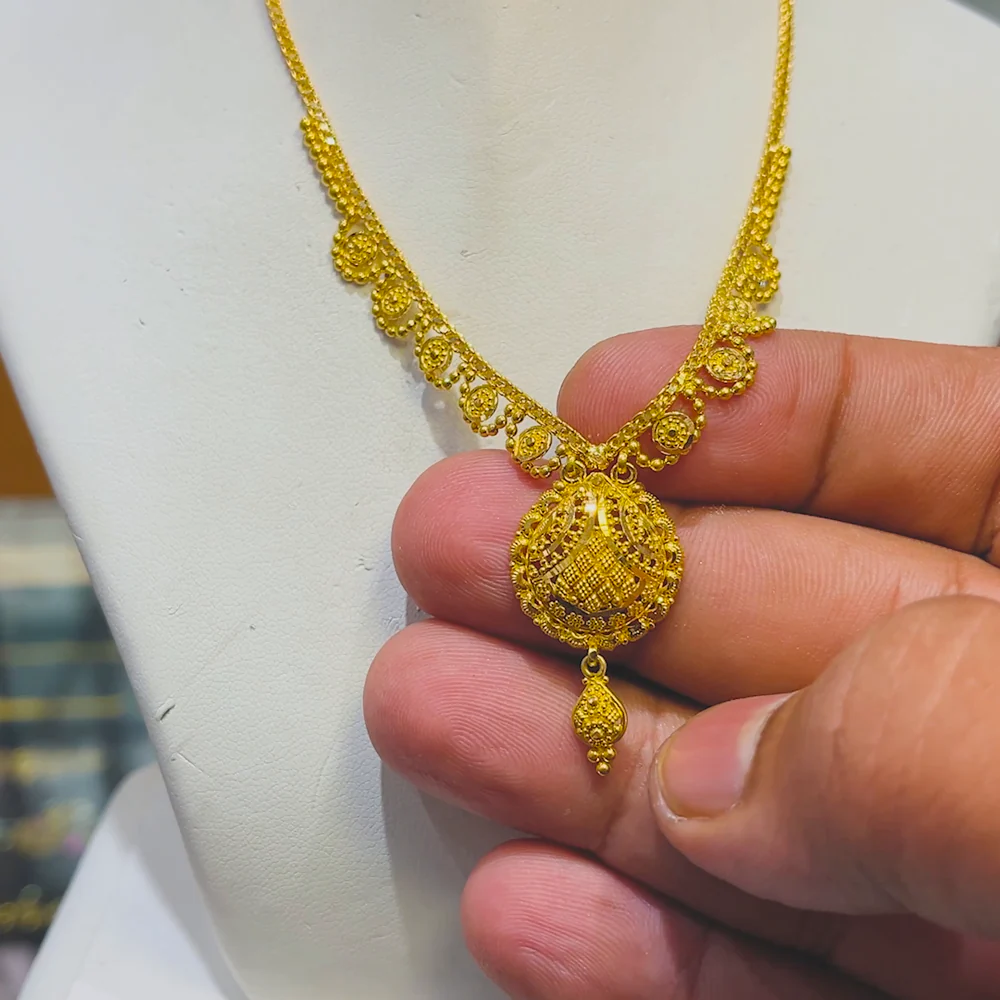
A 10-gram gold Rani Haar is considered a lightweight or minimal option. At this weight, designs are usually simpler, with limited detailing and lighter pearl use.
This weight range is generally suitable for:
- Small functions
- Gifting purposes
- Buyers looking for traditional styling without heavy investment
Because the gold quantity is lower, the base gold cost is comparatively less. However, even at 10 grams, making charges still apply, which means pricing depends heavily on design rather than weight alone.
20 Gram Gold Rani Haar Price
A 20-gram Rani Haar is one of the most balanced choices for buyers. It offers:
- Better design flexibility
- Visible pearl detailing
- Comfortable wear without excessive heaviness
This weight is commonly preferred for pre-wedding functions and festive occasions. Since gold jewellery prices rise directly with weight, a 20-gram Rani Haar typically costs significantly more than a 10-gram piece, even if the design style is similar.
25 Gram Gold Rani Haar Price
At 25 grams, a Rani Haar enters the entry-level bridal category. This weight allows:
- More intricate craftsmanship
- Layered or elongated designs
- Better balance between richness and wearability
Jewellery at this weight usually carries higher making charges due to added design complexity. Retail listings show that once weight increases beyond 20 grams, craftsmanship plays a much bigger role in determining price.
40–50 Gram Gold Rani Haar Price
A 40–50 gram Rani Haar is considered a traditional heavy bridal necklace. These pieces are often:
- Paired with chokers or matching jewellery sets
- Designed with dense pearl work or elaborate motifs
- Crafted for weddings and grand ceremonies
Real jewellery listings show that heavy 22K gold Rani Haars can reach prices running into several lakhs, depending on design and brand . At this weight, both gold value and making charges contribute substantially to the final price.
Minimum Weight Required for a Rani Haar
Unlike regular necklaces, a Rani Haar requires a certain minimum weight to maintain its traditional length and structure. While there is no fixed rule, jewellers generally consider:
- Lower weights suitable only for minimalist designs
- Higher weights necessary for full traditional or bridal styles
Pearl Rani Haars may have a slightly higher gross weight due to additional materials, which also influences pricing.
Weight vs Design vs Price (Quick Comparison)
| Weight Range | Design Flexibility | Price Impact | Best Use |
|---|---|---|---|
| 10g | Limited | Lower | Gifting, small functions |
| 20g | Moderate | Medium | Festive wear |
| 25g | High | Higher | Entry-level bridal |
| 40–50g | Very High | Premium | Traditional weddings |
This comparison highlights why weight should always be evaluated alongside design value, not in isolation.
Things to Check Before Buying a Rani Haar by Weight
Before finalising a purchase, buyers should verify:
- BIS Hallmark certification, which confirms gold purity
- Gold purity level (18K vs 22K), as higher purity increases cost
- Making charges, which can range widely depending on design
- Pearl authenticity and setting quality
To understand how gold purity impacts cost and durability, compare 18K, 22K & 24K Gold Rani Haar prices.
FAQs – Rani Haar Weight & Price
What is the ideal weight of a bridal Rani Haar?
Bridal Rani Haars are generally heavier to support traditional designs, though modern brides may choose lighter options based on comfort and budget.
Is a heavier Rani Haar always better?
Not necessarily. Heavier pieces cost more, but design quality and wearability are equally important factors.
Does pearl work increase the weight of a Rani Haar?
Yes. Pearl settings can increase the gross weight and also add to making charges, affecting the final price .
Can lightweight Rani Haar look bridal?
With modern craftsmanship, lightweight designs can still appear bridal while offering better comfort and affordability.
Conclusion
When evaluating a Rani Haar, weight is the strongest driver of price, but it should never be the only deciding factor. Gold rate per gram, purity, making charges, and design complexity all combine to determine the final cost. From lightweight 10-gram options to traditional 50-gram bridal pieces, understanding how price scales with weight helps you make a confident and informed purchase.
Always balance comfort, occasion, and craftsmanship with your budget to choose a Rani Haar that truly offers value.