Table of Contents
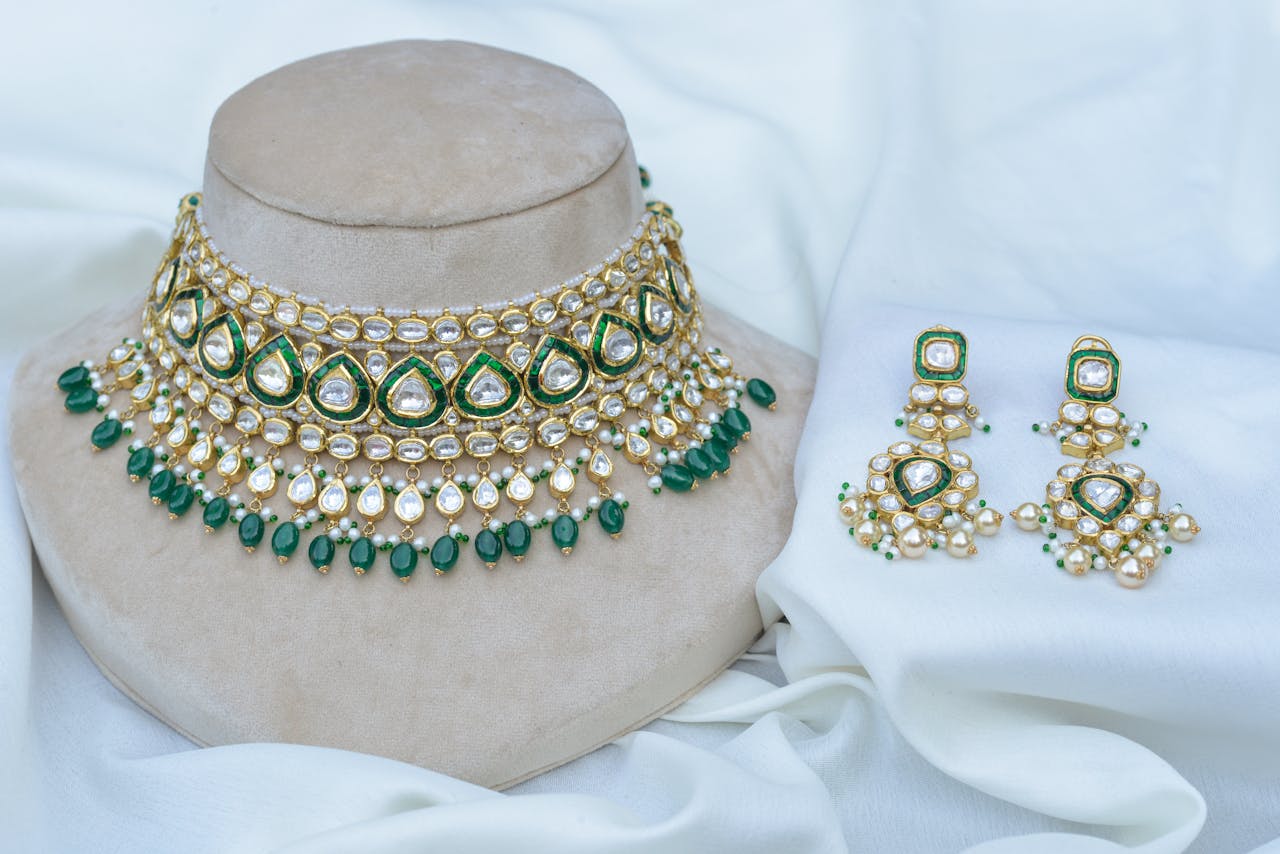
Kundan jewellery is one of the oldest and most refined forms of traditional Indian gemstone jewellery. Known for its regal appeal and intricate craftsmanship, it has been associated with royalty, heritage, and bridal elegance for centuries.
This jewellery style involves setting gemstones into a base using highly refined gold foil — a technique that distinguishes it from other traditional jewellery forms.
Meaning of the Word “Kundan”
The word “Kundan” means highly refined or pure gold.
In jewellery-making, Kundan refers to the technique of setting gemstones with thin layers of pure gold foil between the stones and their mount.
History and Origin of Kundan Jewellery
Kundan jewellery originated in the royal courts of India and flourished under Mughal patronage. It later became strongly associated with Rajasthan and Gujarat, particularly Jaipur, which remains a major center for Kundan craftsmanship.
According to historical fashion documentation, Kundan jewellery evolved under the influence of Mughal aesthetics and became a symbol of luxury and nobility.
It is considered one of the oldest forms of Indian jewellery-making, deeply rooted in traditional artisan techniques.
How Kundan Jewellery is Made
The making of Kundan jewellery is a labor-intensive and highly skilled process.
Lac Base Preparation
The process begins with creating a base structure, often filled with lac (a natural resin) to support the setting.
Gold Foil Setting
Thin sheets of pure gold foil are pressed into place around the gemstones.
Gemstone Placement
Gemstones are carefully set into the softened gold foil, which holds them securely in position.
Meenakari (Enamel Work)
Many traditional Kundan pieces feature colorful enamel work, known as Meenakari, on the reverse side. This technique has historical connections to Persian enamel traditions.
This detailed handcrafting process makes Kundan jewellery unique and highly valued.
Materials Used in Kundan Jewellery
Kundan jewellery may include:
- Highly refined gold foil
- Lac (natural resin base)
- Precious and semi-precious stones such as emeralds, rubies, and sapphires
- Sometimes colored glass elements for decorative brilliance
The combination of gold foil and carefully selected stones gives Kundan its characteristic rich and layered appearance.
Cultural Significance of Kundan Jewellery
Historically, Kundan jewellery symbolized wealth, prestige, and royal status.
Today, it continues to be popular in:
- Bridal jewellery sets
- Traditional Indian weddings
- Festive occasions
- Cultural ceremonies
Its elaborate craftsmanship and heritage value make it especially favored in bridal collections.
Kundan and Meenakari Connection
Kundan jewellery is often paired with Meenakari enamel work. According to craft documentation, Kundan-Meenakari jewellery became especially prominent in Jaipur and reflects a blend of Mughal and regional artistic traditions.
In many traditional pieces:
- The front showcases gemstone Kundan setting.
- The back features vibrant enamel designs.
This dual artistry enhances both aesthetic and cultural value.
Difference Between Kundan and Polki Jewellery
Kundan jewellery is often confused with Polki jewellery because both are associated with royal Indian craftsmanship and traditional bridal designs. However, they are not the same.
Kundan refers to the technique of setting gemstones using highly refined gold foil . The focus is on the method of embedding stones into a lac base and securing them with layers of pure gold.
Polki jewellery, on the other hand, uses uncut natural diamonds in its design. While both styles may look similar in bridal sets, the materials and craftsmanship differ significantly.
If you would like to understand Polki in detail — including how it is made, what materials are used, and how it differs from Kundan — you can read our complete guide on What is Polki Jewellery?
Why Kundan Jewellery Remains Popular
Based on historical and cultural records:
- It represents royal Indian heritage
- It involves intricate handcrafted techniques
- It uses traditional gemstone setting methods with pure gold foil
Because of this craftsmanship and history, Kundan jewellery continues to hold a strong place in traditional Indian fashion.
Frequently Asked Questions
Is Kundan Jewellery Made Of Real Gold?
Kundan jewellery uses highly refined pure gold foil in its setting process . However, the overall gold content may vary depending on the piece.
Where Did Kundan Jewellery Originate?
It originated in India, flourished in the Mughal courts, and became strongly associated with Rajasthan and Gujarat.
What stones are used in Kundan jewellery?
It may include precious and semi-precious gemstones such as emeralds, rubies, and sapphires.
What is the role of lac in Kundan jewellery?
Lac is used as a base material to support the gemstone setting.

One thought on “What is Kundan Jewellery?”